Pluto and Kuiper Objects

Glacier on Pluto
Glacier on Pluto
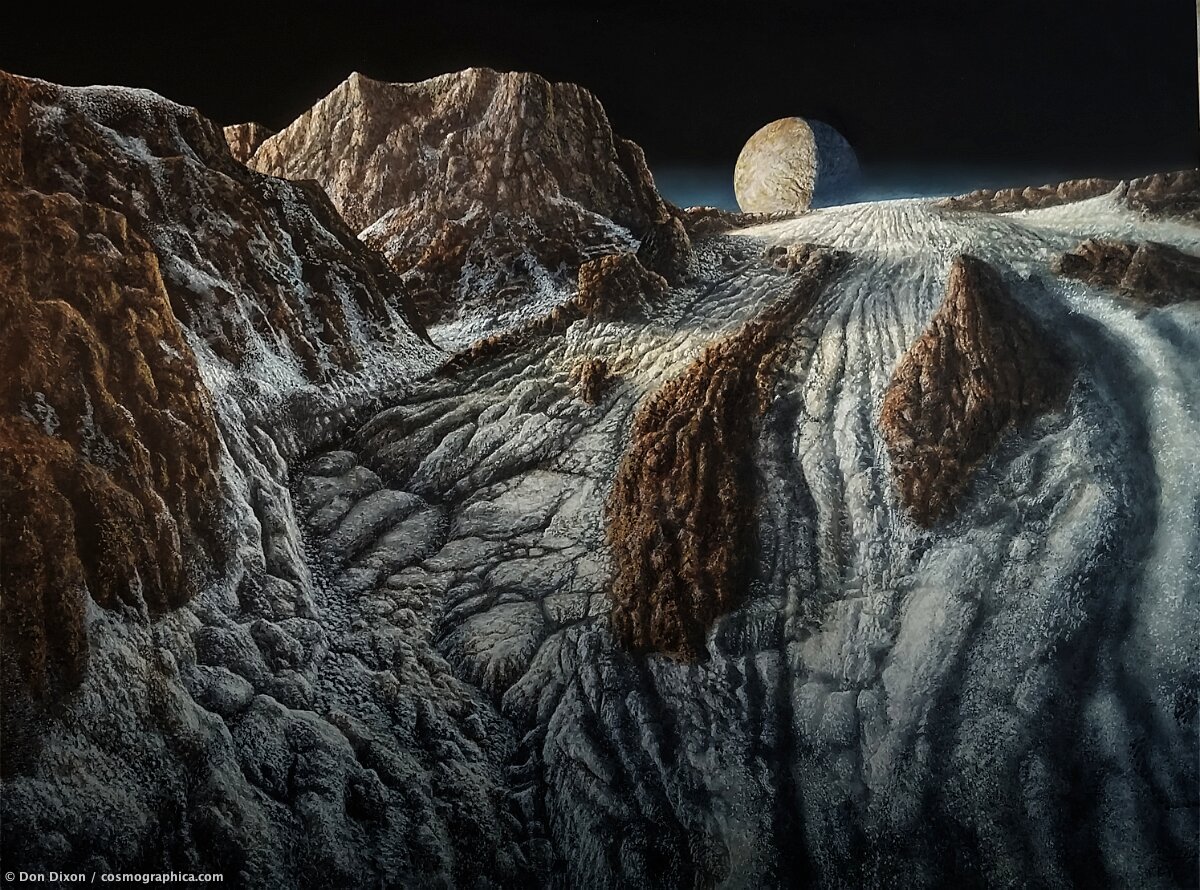
503-pluto-glacier-dixon – This vivid space art painting explores a rugged planetary landscape, capturing a sprawling nitrogen ice glacier moving through steep mountain passes on Pluto, The moon Charon hangs low against the dark void of space. Oil on Masonite panel 2015.
Hypothetical Planet X
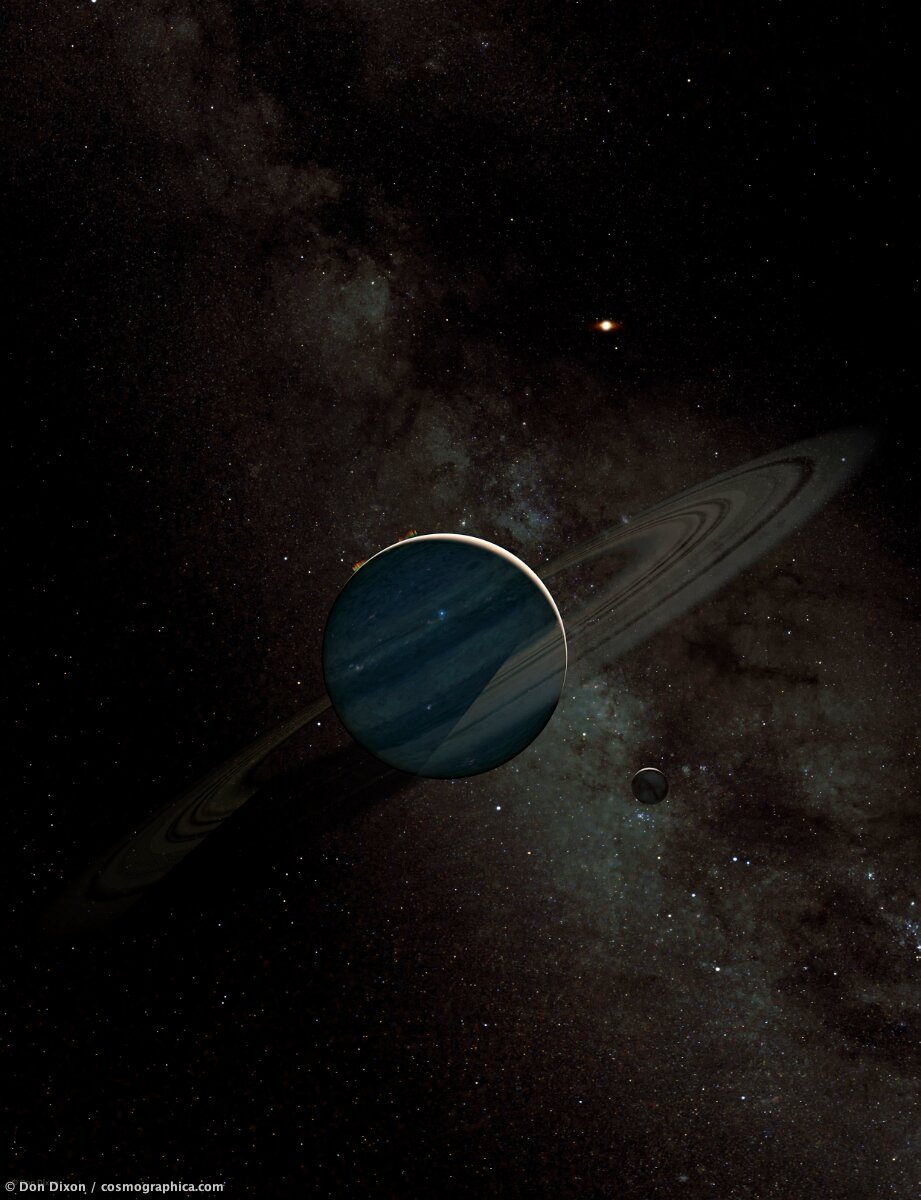
500-planet-nine-dixon – A hypothetical planet in the outer reaches of the solar system orbits more than 700 times farther from the sun than earth does. A super-Earth, with an estimated mass of 10 Earths (approximately 5,000 times the mass of Pluto), a diameter two to four times that of Earth, and a highly elliptical orbit with an orbital period of approximately 15,000 years, the planet is shown as a ringed ice giant whose night side is illuminated by lightning and aurorae powered by galactic cosmic rays. digital painting, copyright Don Dixon, 2016
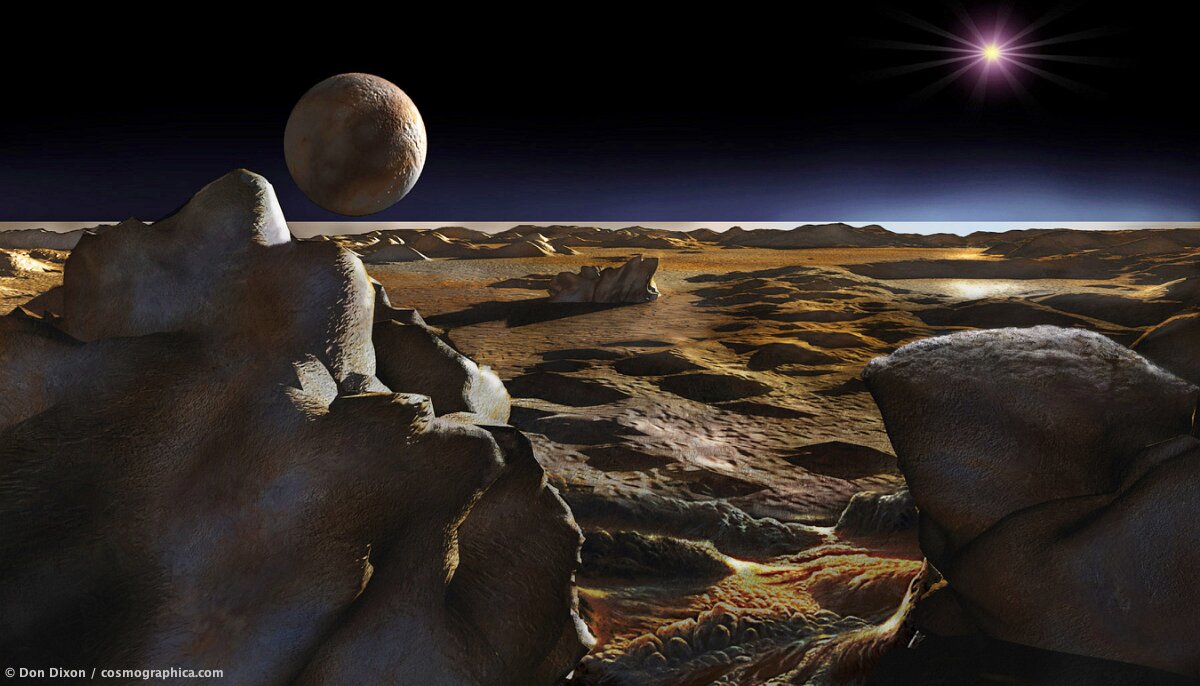
Pluto Landscape

Pluto Landscape

397-pluto-landscape-dixon –This detailed astronomical painting portrays a sweeping panoramic landscape on the surface of Pluto under a faint, distant Sun. The composition looks out across low, fractured plain structures and fields of nitrogen ice that stretch toward a flat horizon under a dark sky transitioning to a subtle blue atmospheric haze. In the foreground, dark, crystalline methane ice formations and rugged boulders block out a massive, heavily detailed crescent Charon hanging low in the upper left quadrant. painting by Don Dixon for Scientific American
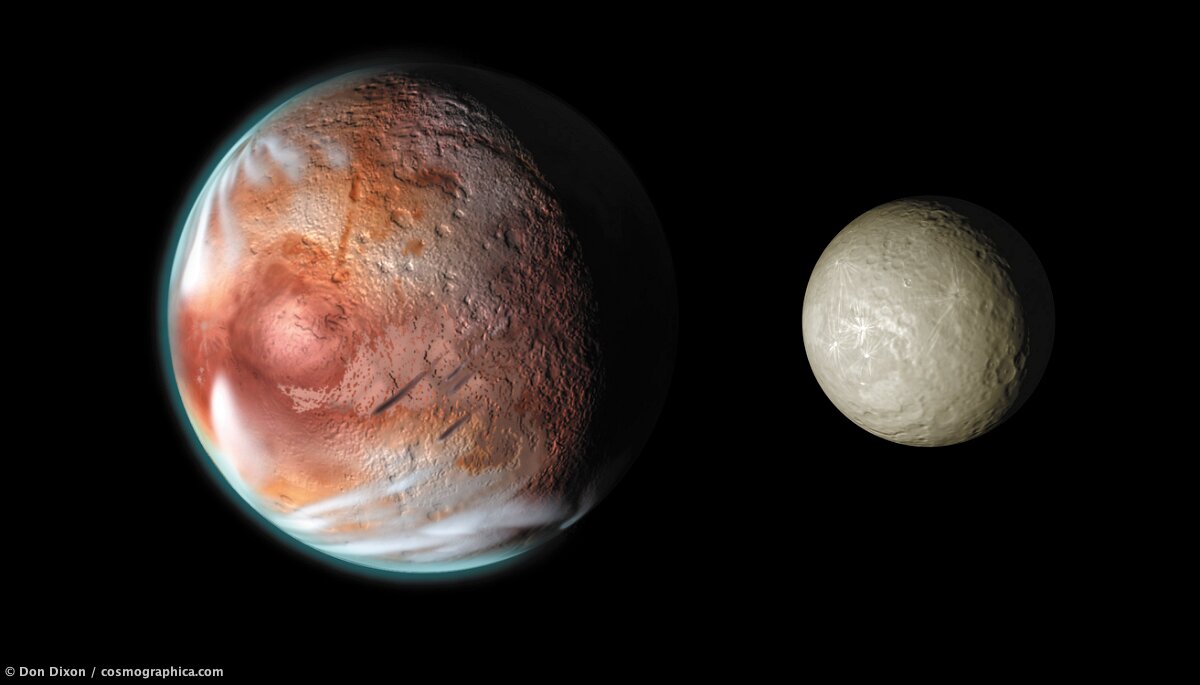
Pluto and Charon compared

Pluto and Charon compared

396-pluto-charon-compared-dixon –This astronomical infographic side-by-side comparison features the dwarf planet Pluto and its largest moon, Charon, isolated against a plain black background to illustrate their relative scales, surface compositions, and coloration. Pluto on the left appears as a highly textured sphere showing prominent mottled reddish-brown terrains, dark equatorial bands, bright icy patches, and a thin, glowing atmospheric limb of pale blue. Charon on the right is rendered at its proper relative scale, displaying a starkly contrasting neutral gray, heavily cratered icy surface marked by a prominent network of bright rays emanating from impact sites across its face. - 2008 painting by Don Dixon for Scientific American
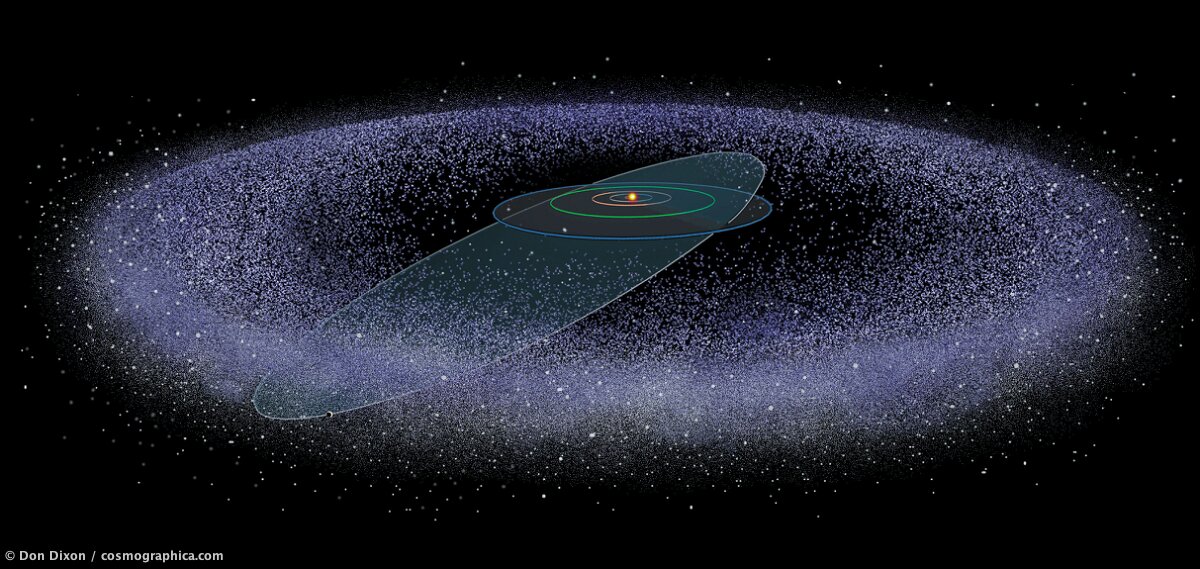
Kuiper Belt

Kuiper Belt

367-kuiper-belt-dixon –This digital diagram illustrates the architecture of the outer solar system, centering on the sun and the concentric orbits of the giant planets. Surrounding these orbits is the Kuiper Belt, depicted as a vast, donut-shaped torus comprised of countless icy bodies and debris rendered in shades of blue and white. A highly inclined, elongated elliptical orbit is highlighted, representing the path of a trans-Neptunian object (like Pluto) cutting through the main plane of the disc. Digital 1999 © Don Dixon
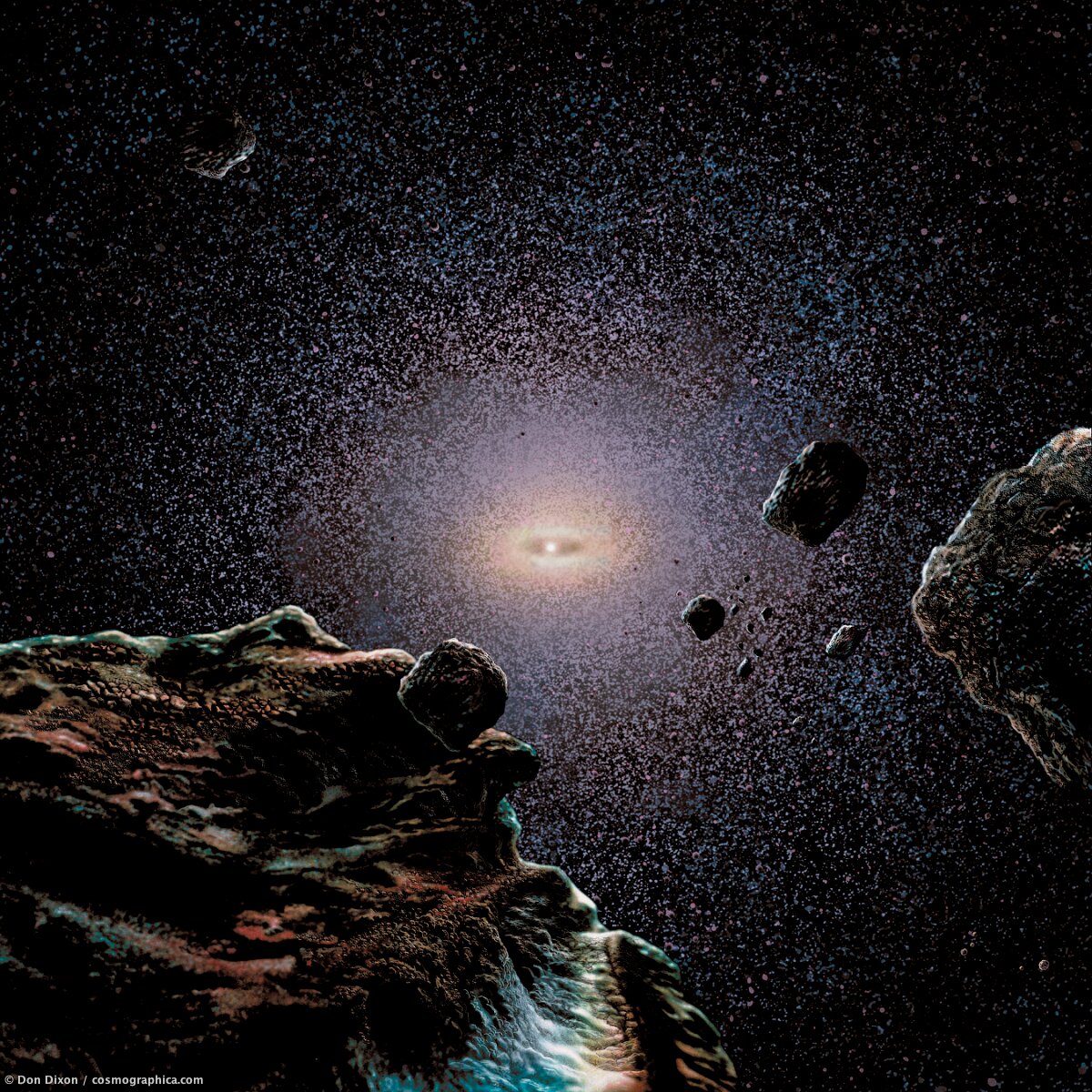
Oort Cloud
Oort Cloud
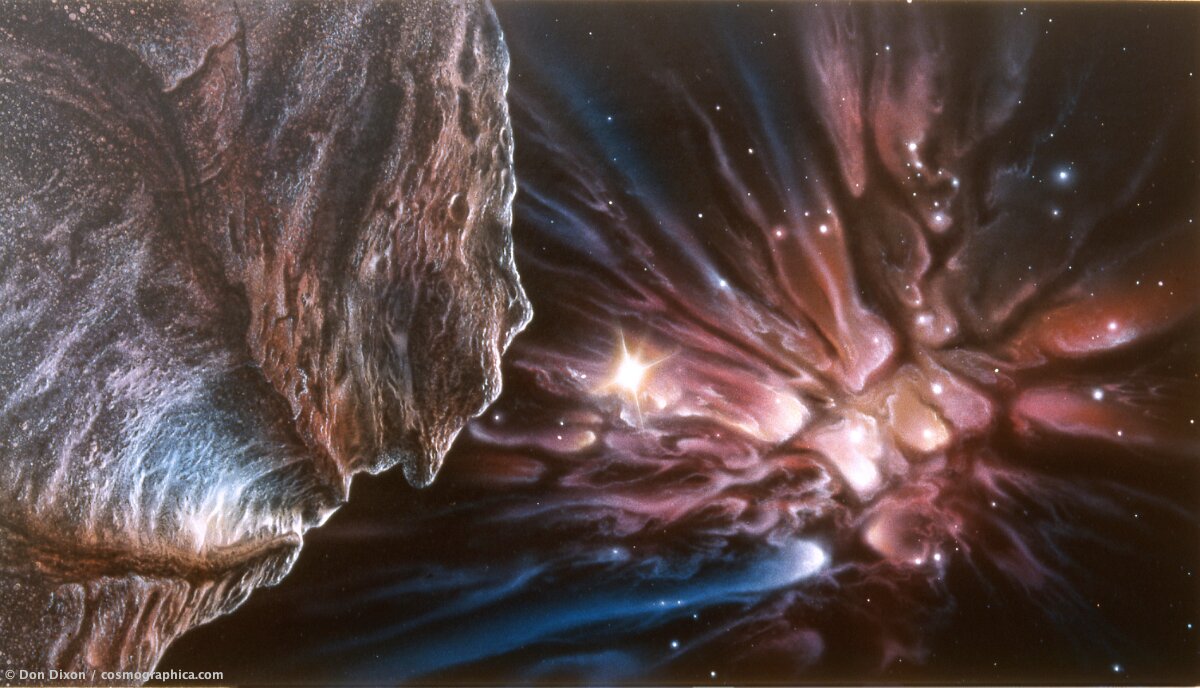
328-oortcloud-dixon – This astronomical illustration presents a view from within the inner regions of the Oort Cloud, looking back toward the distant Sun. In the foreground, craggy, irregularly shaped icy planetesimals and cometary nuclei are rendered with detailed, textured surfaces under faint illumination. In the background, the Sun appears as a bright, central star surrounded by a hazy, glowing disc of dust, which transitions into a vast, spherical swarm of countless microscopic icy particles extending across deep space. Digital painting by Don Dixon for Scientific American, 1999, © Don Dixon
292-oort-body-dixon.jpg

292-oort-body-dixon – a comet nucleus, whose exotic ices are stained brown by cosmic radiation, basks in the light of an ancient supernova.
211-clyde-tombaugh-dixon.jpg

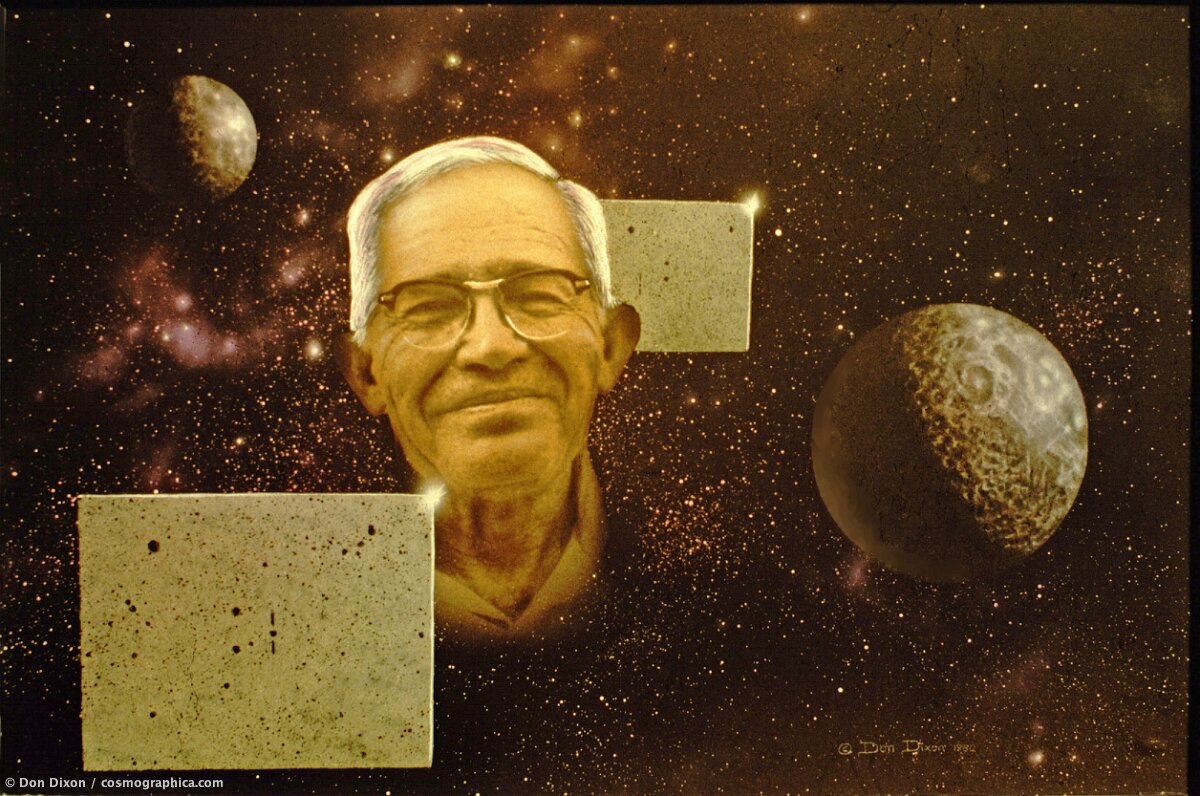
211-clyde-tombaugh-dixon – A montage portrait honors American astronomer Clyde Tombaugh, the discoverer of Pluto. His likeness is set against a dense background of stars and interstellar nebulae, flanked by two celestial bodies representing Pluto and its largest moon, Charon, depicted with cratered, icy surfaces. Two overlapping rectangular photographic plates containing faint star fields represent the blink comparator method used to detect Pluto's motion in 1930., 50th anniversary commemorative poster, 1980
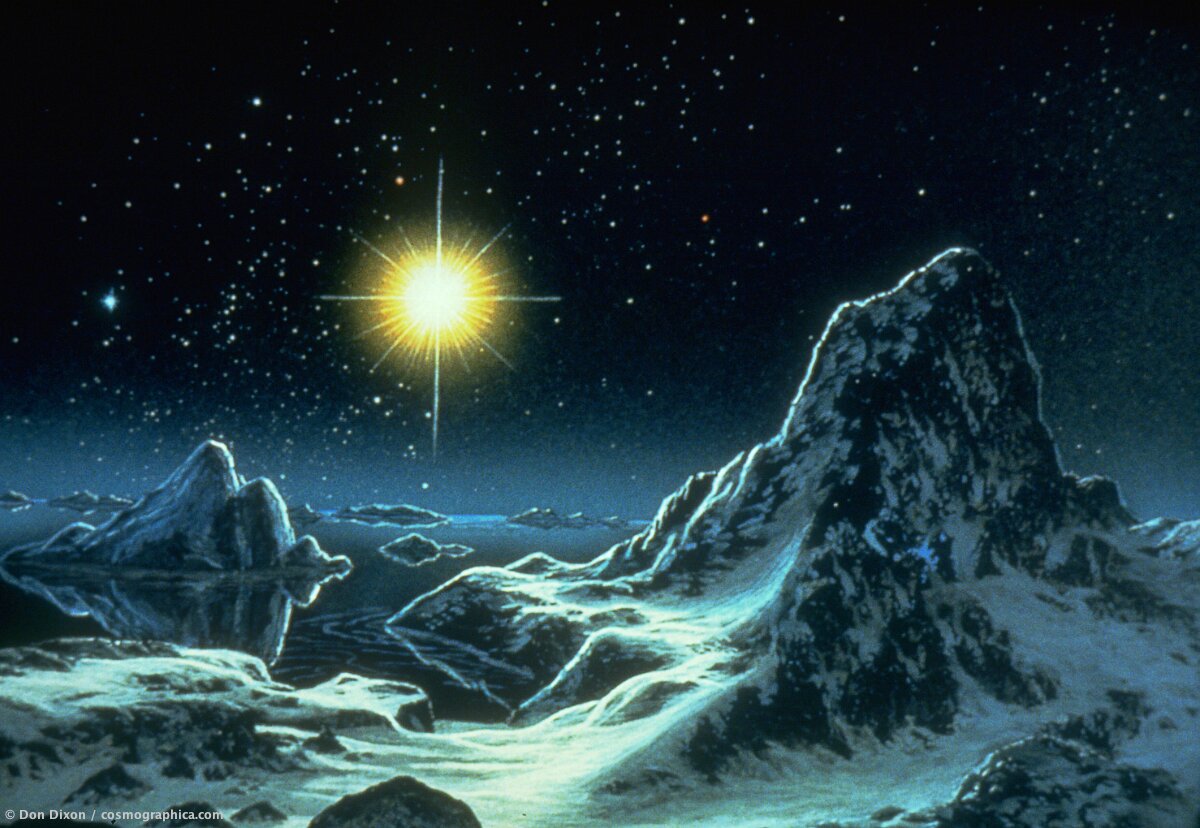
180-pluto-perihelion-dixon
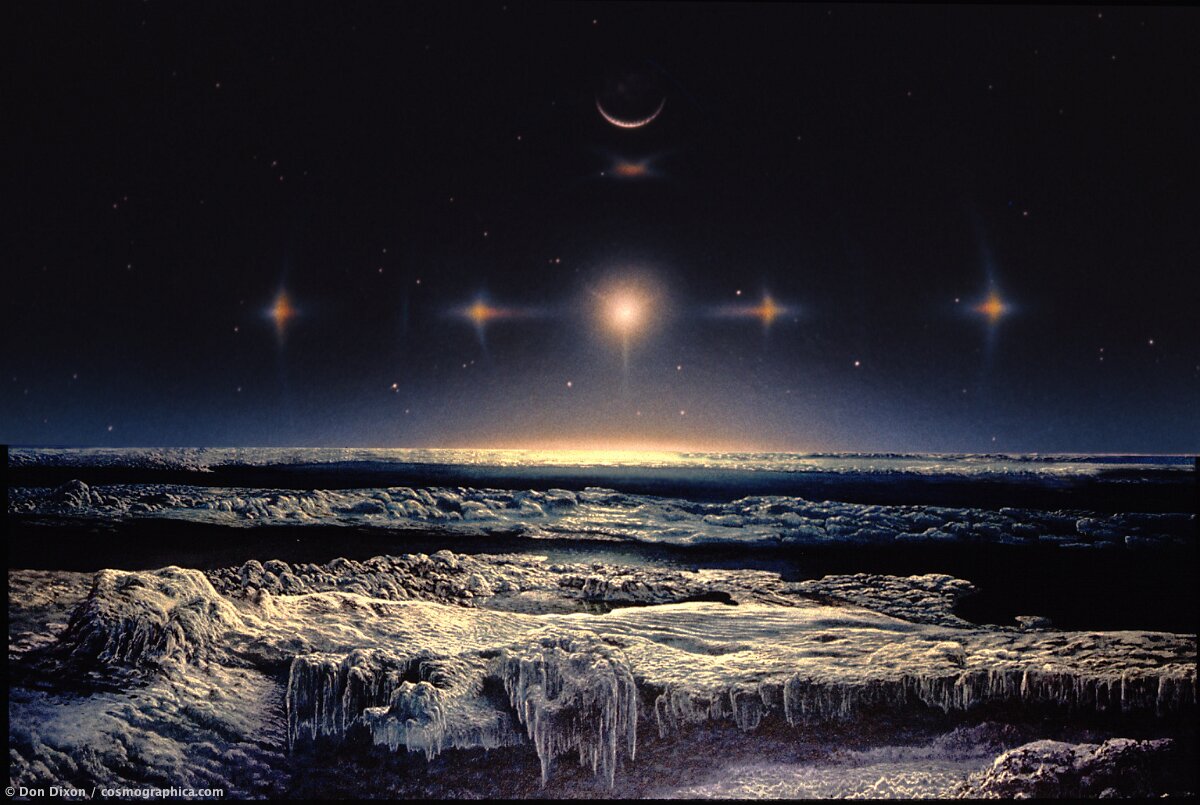
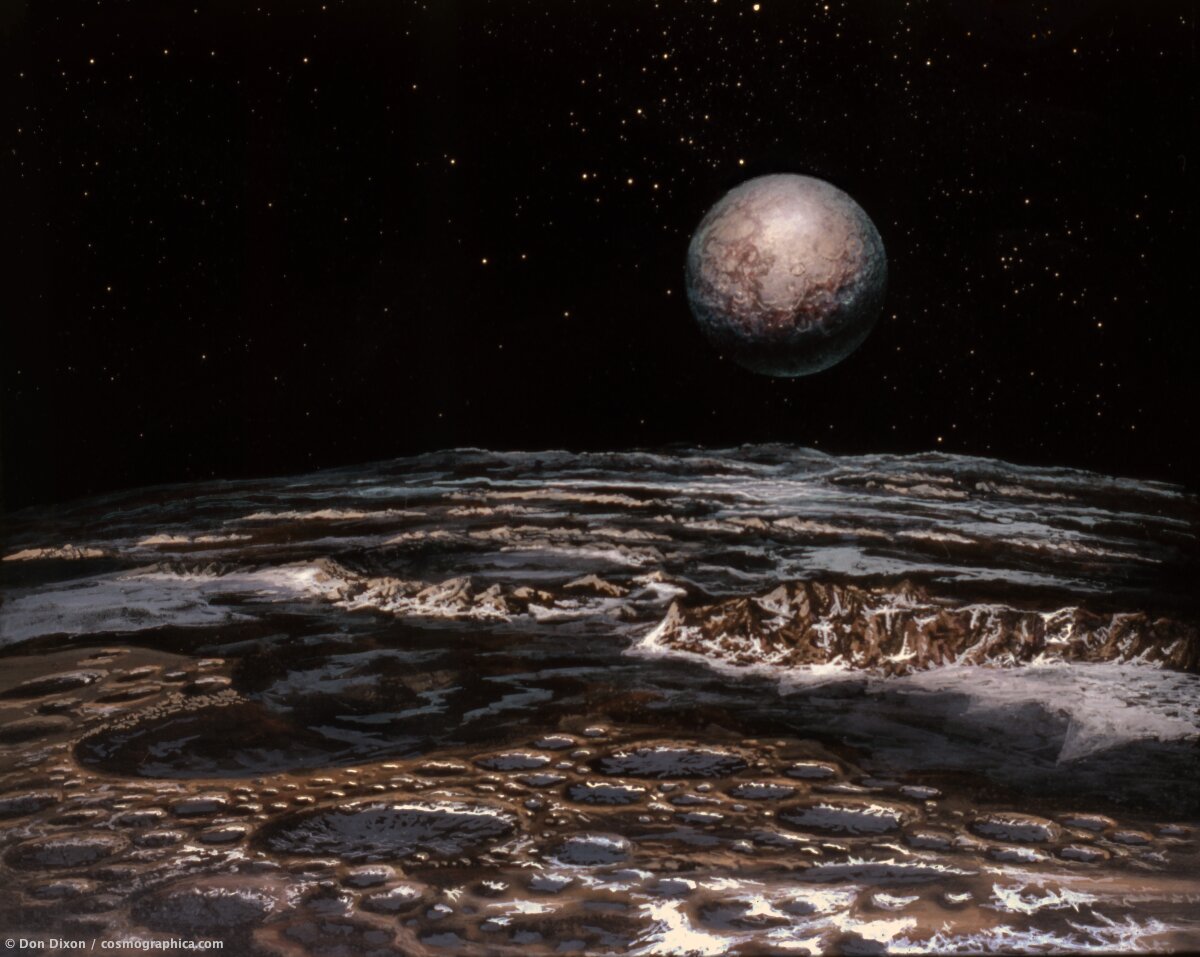
180-pluto-perihelion-dixon – This scene depicts the surface of Pluto during its perihelion passage, when its eccentric orbit brings it closest to the Sun. Nitrogen and methane glaciations coat the foreground landscape, with delicate icicles suspended from low ice shelves under a faint, sublimating atmospheric haze. The brilliant Sun sits low on the horizon, flanked by bright parhelia (mock suns) or optical glares caused by airborne ice crystals, while the crescent moon Charon hangs high in the dark sky above. acrylic and gouache, 1980
Pluto and Charon
Pluto and Charon
123-pluto-charon-dixon.jpg– A remarkably prescient rendering of Pluto and its moon Charon, which form a double planet at the frontier of the solar system, cover for Out of the Darkness, by Clyde Tombaugh, discoverer of Pluto ; acrylic and gouache on illustration board, 1979, © Don Dixon
044-pluto-1-dixon
044-pluto-1-dixon – Pluto depicted with lakes of liquid air, an outdated concept - painting by Don Dixon, acrylic and gouache 1975. © Don Dixon
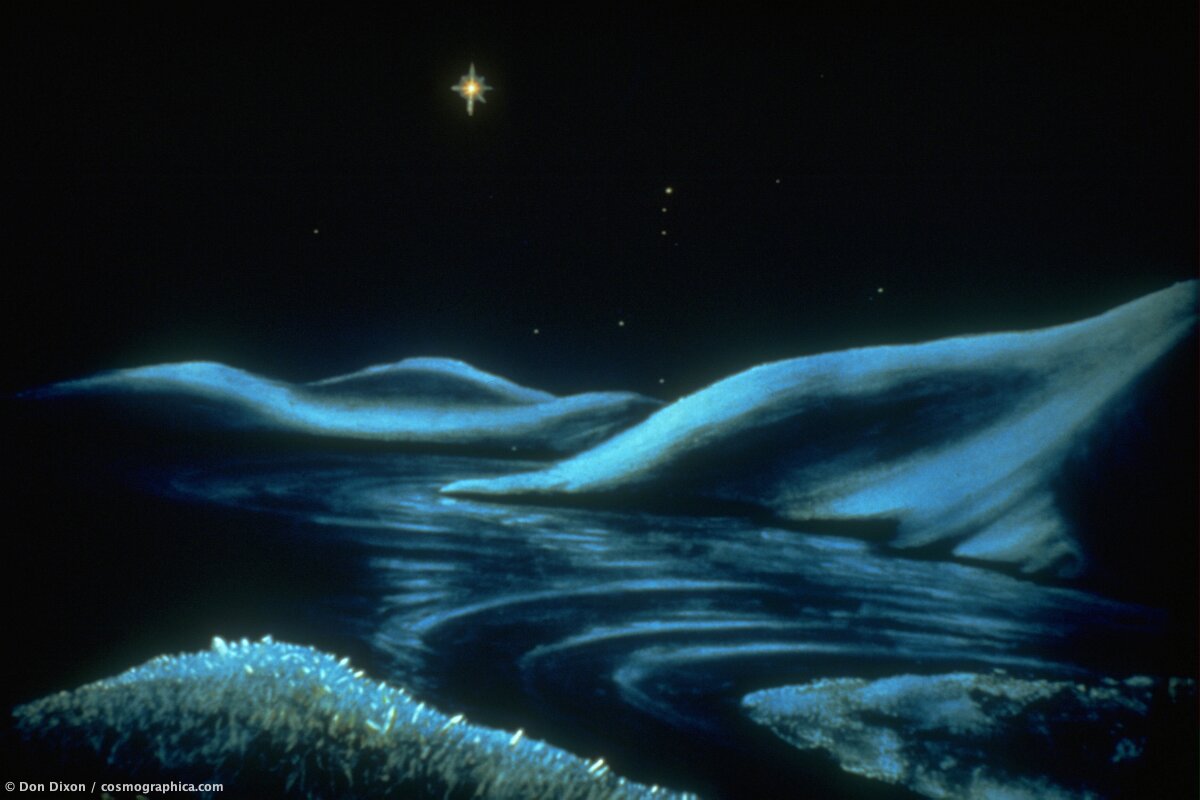
015-planet-x-dixon
015-planet-x-dixon – This space art rendering depicts a hypothetical trans-Neptunian world or "Planet X" shrouded in extreme cosmic cold. Smooth, sweeping dunes of frozen nitrogen or methane ice glint with a cold blue hue beneath an immense, pitch-black sky. A dark, sluggish river of liquid hydrocarbons or liquid nitrogen winds through the desolate plains, reflecting the dim light of an incredibly distant, point-like Sun. oil on canvas, 1973