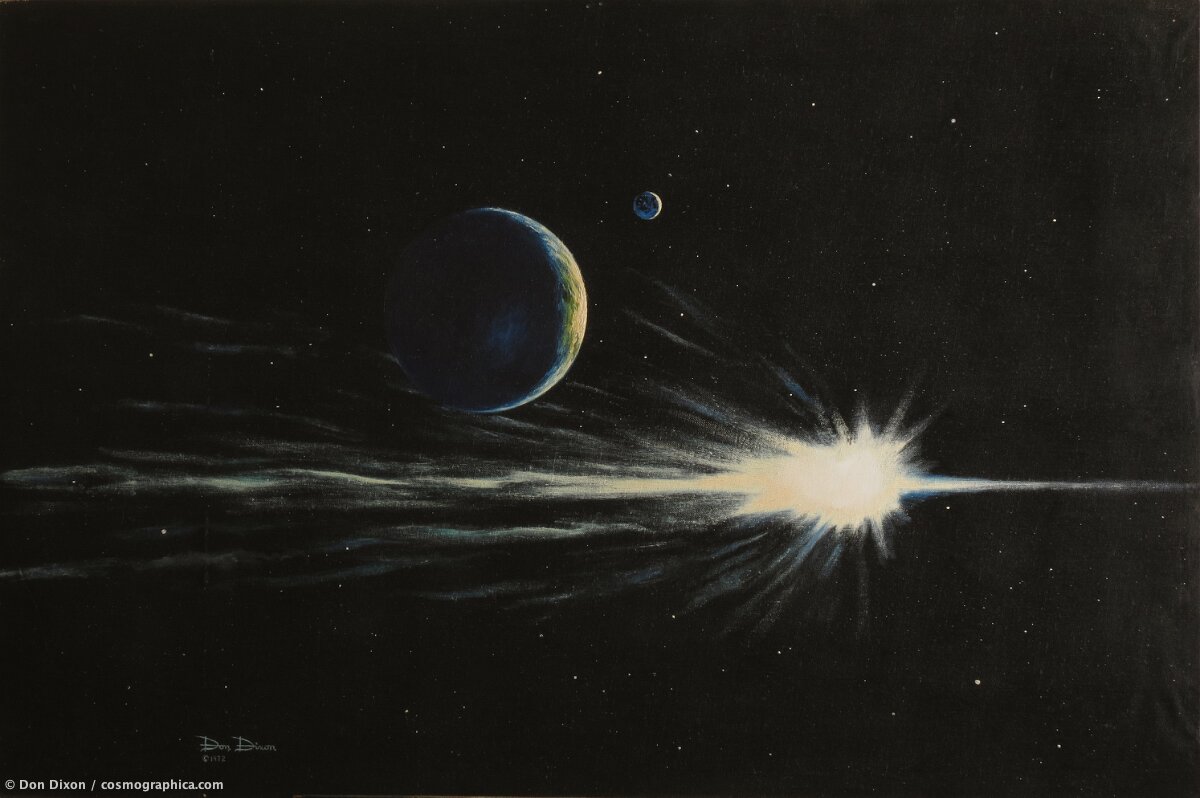
006-Halleys-Comet
006-halleys-comet-earth-moon-encounter-dixon – A vibrant 1972 analog illustration depicting a bright comet, characterized by a brilliant coma and a multi-layered ion tail, traversing the foreground of the Earth-Moon system. The composition uses high-contrast lighting to show the comet's tail-structure sweeping across the dark expanse, with a crescent Earth and distant Moon providing a sense of scale and proximity.An early Spacescapes painting depicts Comet Halley near Earth, 1972; 24 x 36 inches, oil on canvas panel
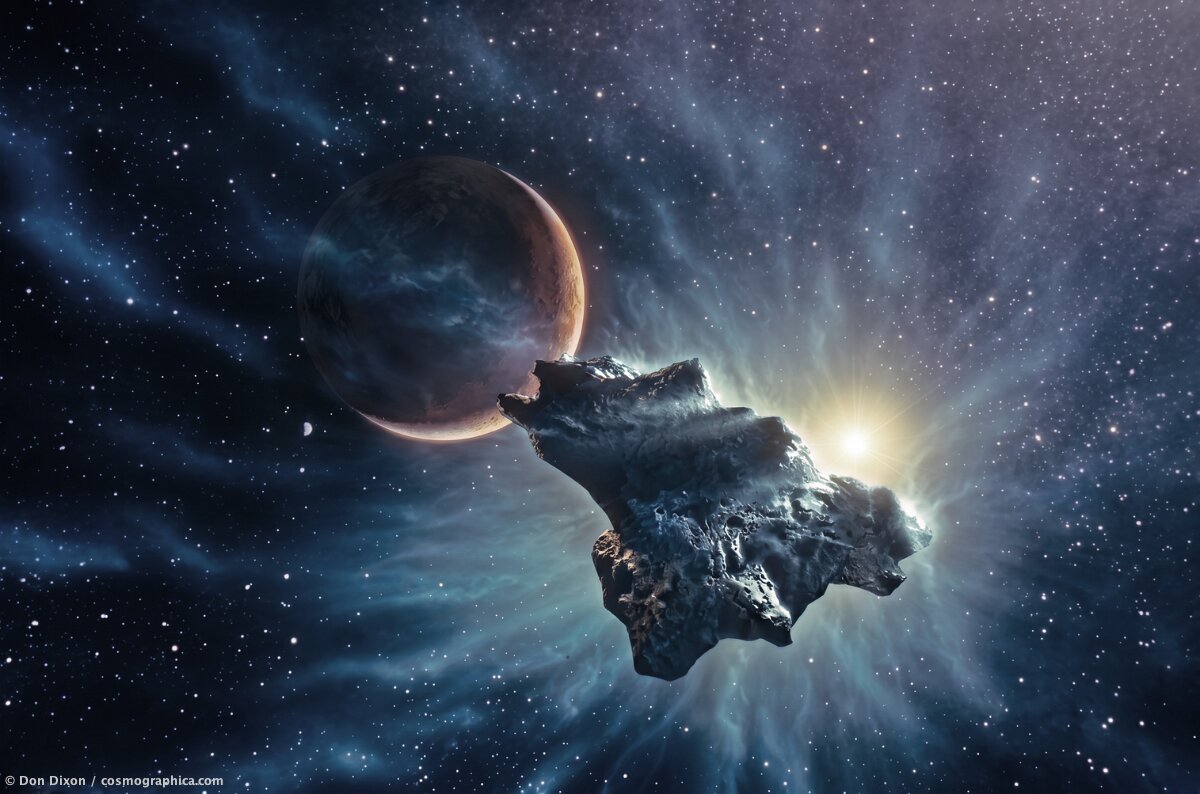
121-comet-nucleus-dixon – A fragment of a comet passes by Mars ; An irregular, cratered comet nucleus drifts in deep space, backlit by a brilliant, concentrated sunburst that illuminates surrounding volatile gas and dust trails. In the background, Mars hangs in partial shadow, flanked by a distant, smaller moon. Whispy filaments of a blue-toned coma weave across the dense starfield, framing the celestial choreography. acrylic on masonite, 1979
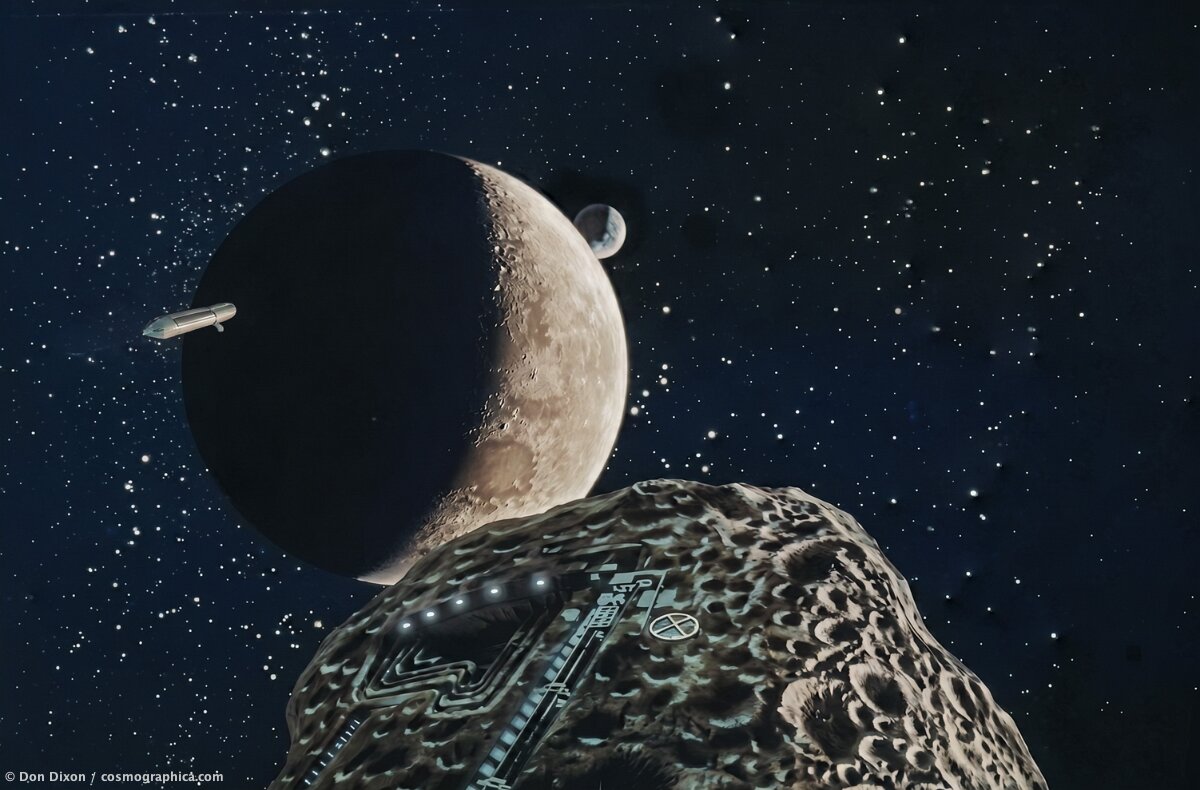
106-Asteroid-Mining
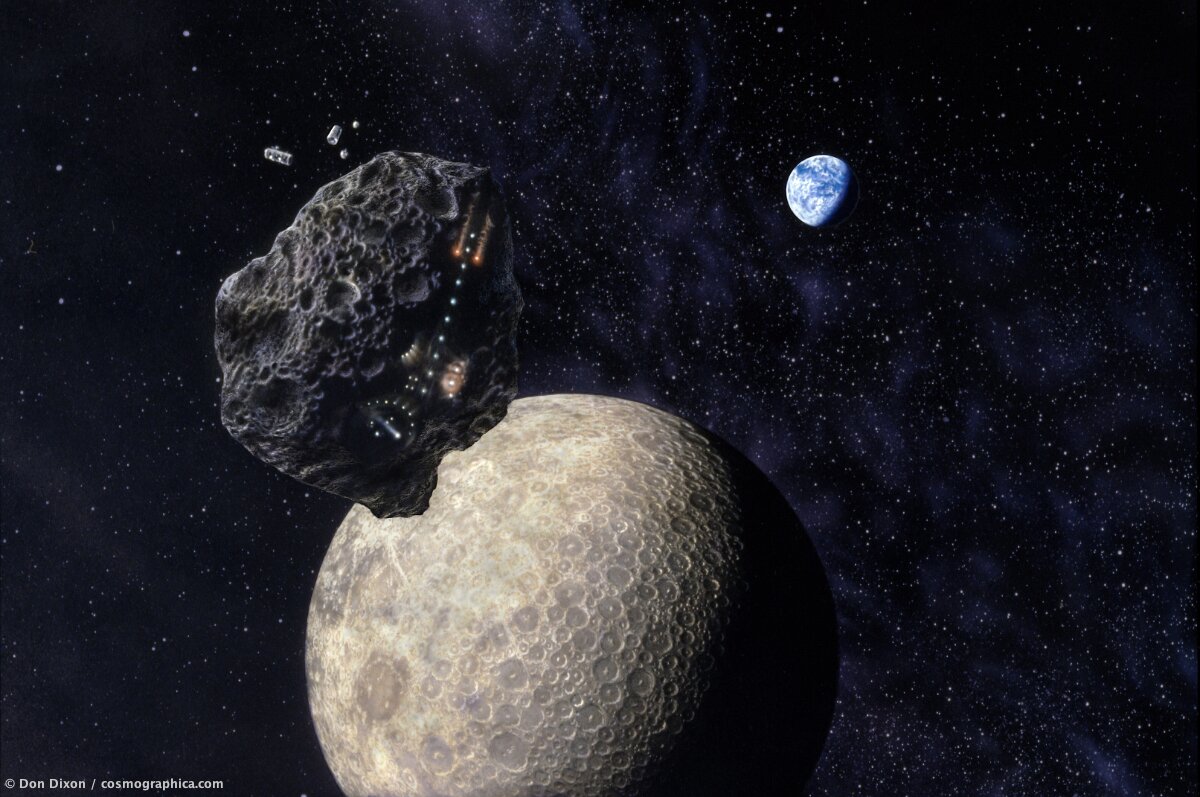
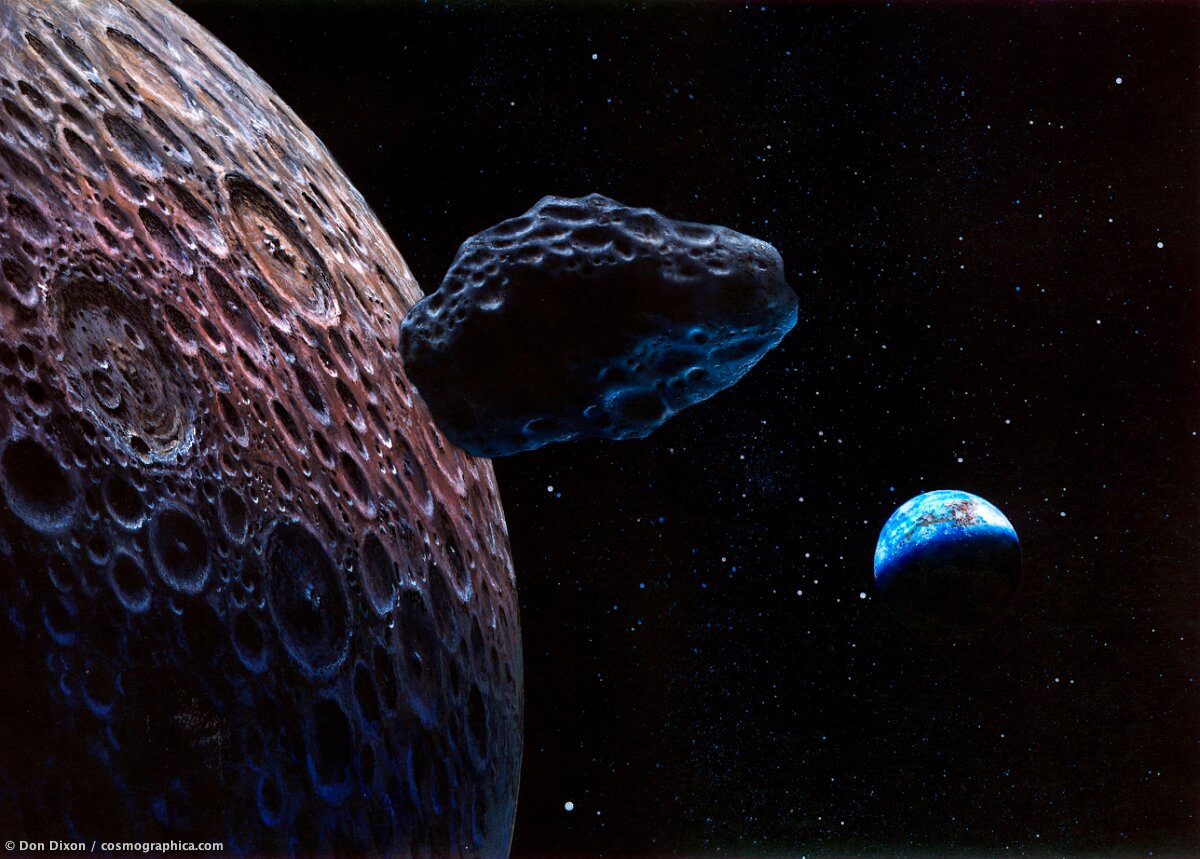
106-asteroid-mining-lunar-orbit-dixon –Speculative illustration of a large asteroid being steered into a high orbit around a crescent Moon for future industrial use. A small spacecraft is positioned near the lunar limb, while the dark, cratered surface of the asteroid in the foreground is equipped with blue navigational or landing lights. The Earth is visible in the distance as a small blue sphere against a dense star field. ; electromagnetic mass drivers eject rock to maneuver an asteroid into orbit between Earth and Moon ; acrylic on board, 1977
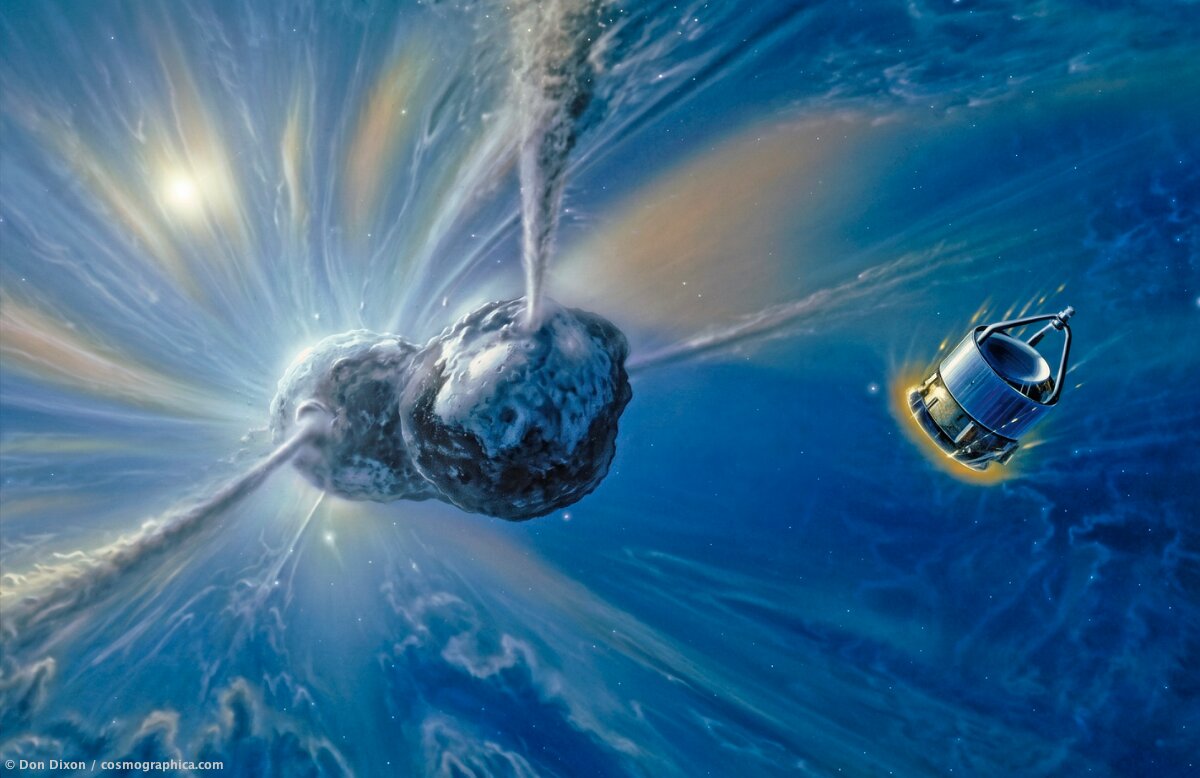
183-giotto-halley-encounter-dixon - painted the night of the Giotto-Halley encounter, the Giotto spacecraft speeds past the dark, bi-lobed nucleus of Halley's Comet, its protective shield glowing yellow from high-velocity dust impacts. Powerful geyser-like jets of volatile gas and dust erupt violently from the active nucleus, streaming into a turbulent, sunlit coma. A brilliant, distant sun illuminates the energetic display of filaments and dust trails slicing through the deep blue cosmic void. for The Orange County Register, acrylic and gouache, 1986.
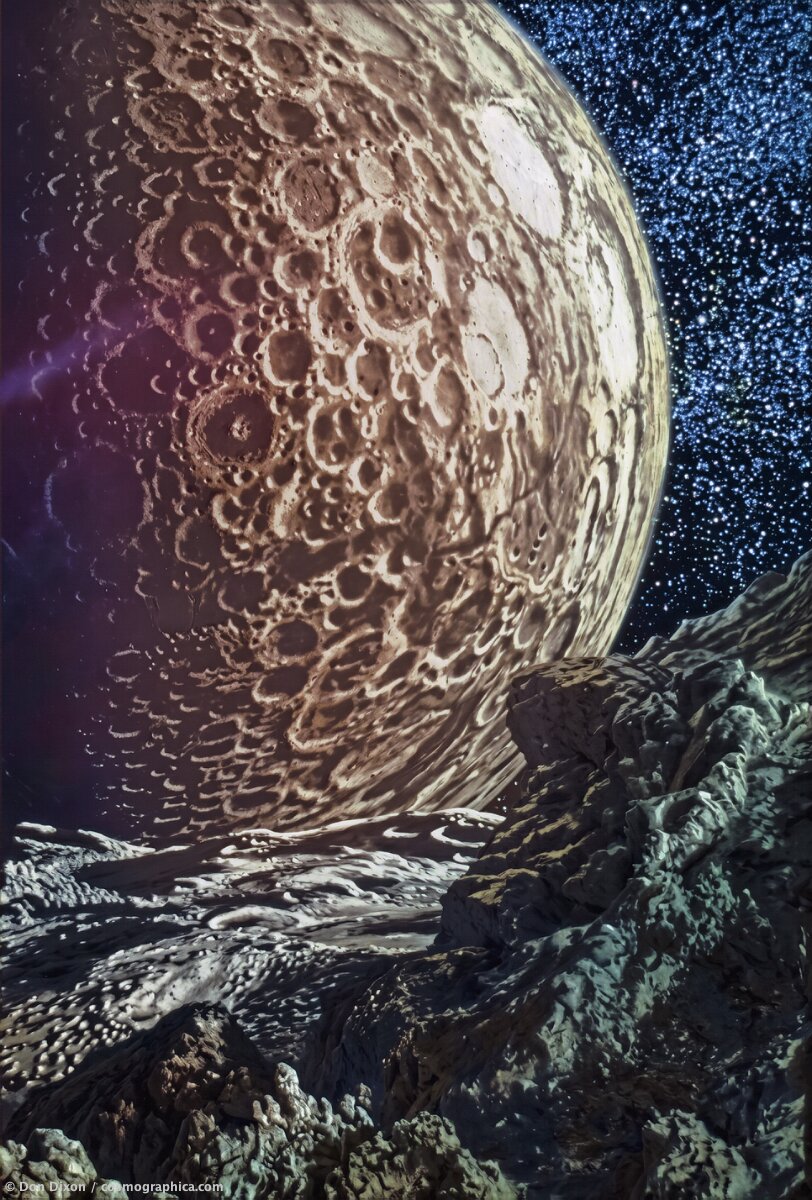
Mining an Asteroid
Operation Asteroid - A mile-long carbonaceous asteroid is maneuvered into orbit over the moon, where it will be mined for organics required to sustain a lunar base. An electromagnetic mass driver provides not only propulsion (by ejecting asteroidal rock at high velocity), but will be used to deliver mined material to the lunar surface where it can be collected by colonists. 18x24 inch acrylic and gouache on Masonite panel, 1980.
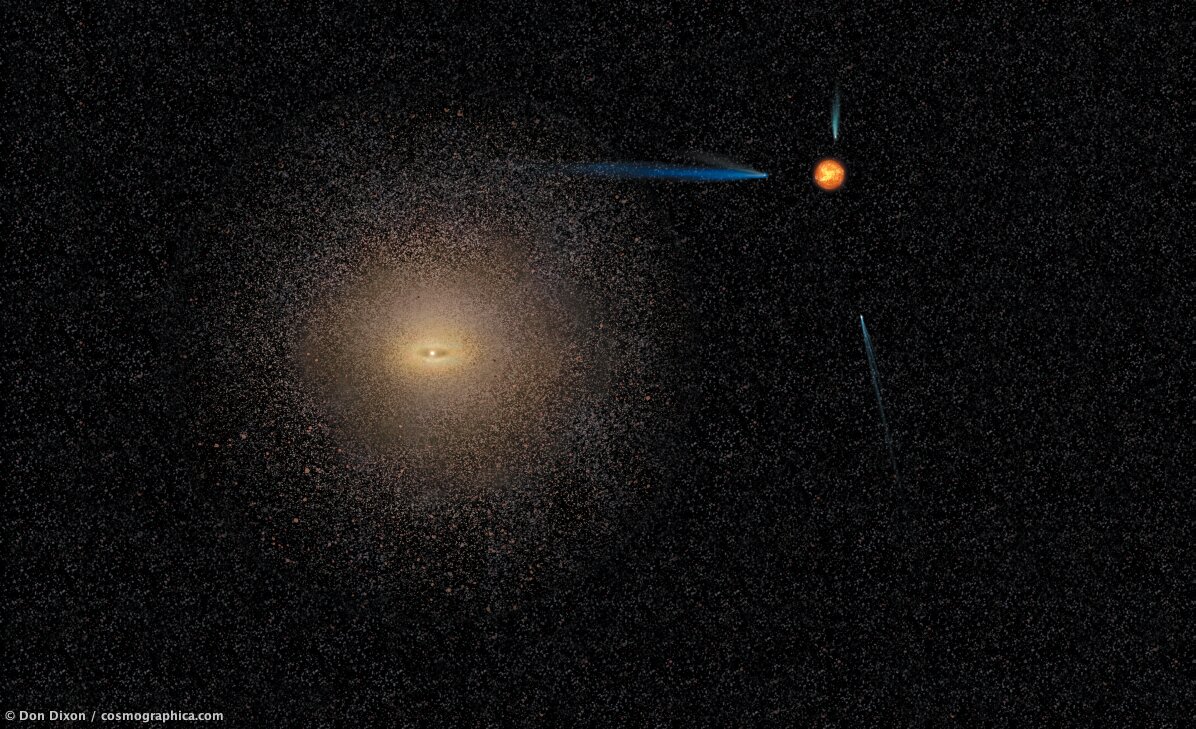
327-Gliese-710-Comets
327-gliese-710-comets-dixon – A wide cosmic diagram illustrates the orange dwarf star Gliese 710 perturbing the Oort cloud of our solar system, triggering a shower of comets. To the left, a spherical cloud composed of millions of icy primordial bodies surrounds a central, bright star system. On the right, the incoming rogue star leaves a wake of active comets with long, luminous blue ion tails streaming away into a vast, dense field of background stars. digital, for Scientific American, circa 2000.
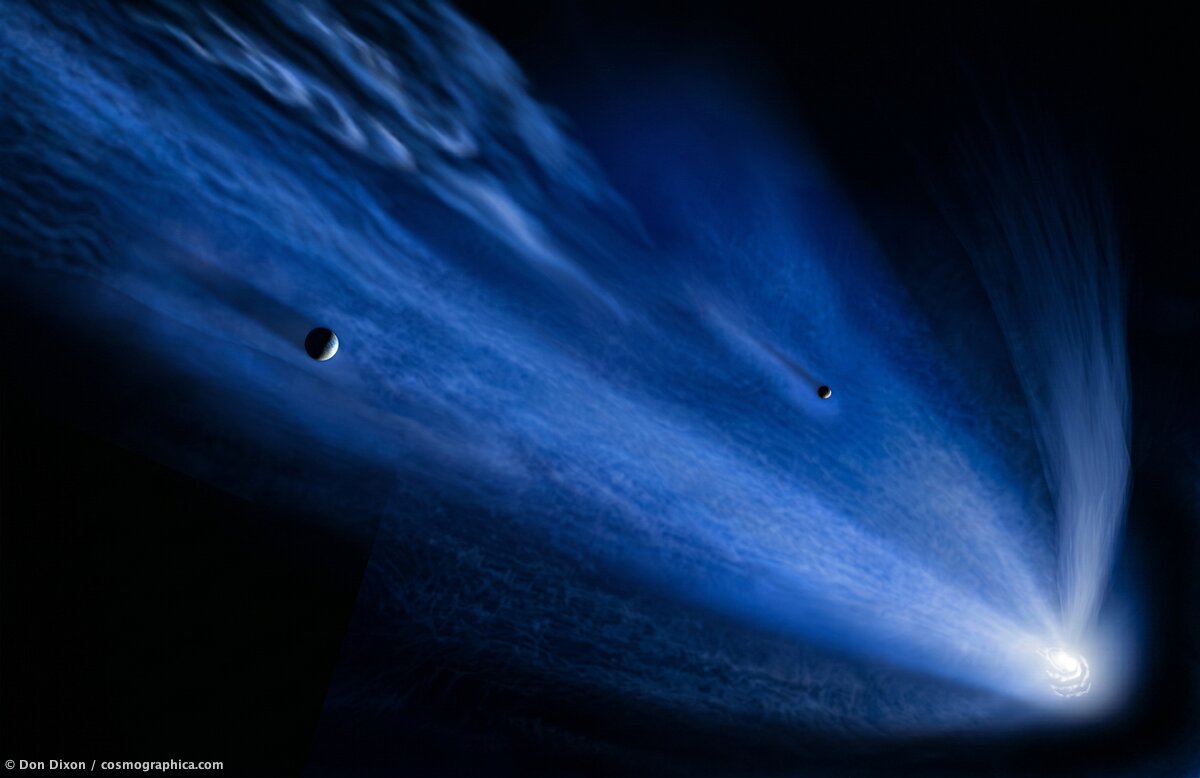
414-comet-tail-passage-dixon – A brilliant comet nucleus blazes in the lower right quadrant, generating an expansive, luminous blue ion tail that stretches diagonally across the frame. Earth and Moon are immersed directly within the flowing streams of the cometary tail, casting subtle shadows or wakes through the gas. Wispy, delicate filaments of dust and energized ions curve gracefully away from the core, highlighting the intense solar wind interaction in deep space. digital, circa 2000.
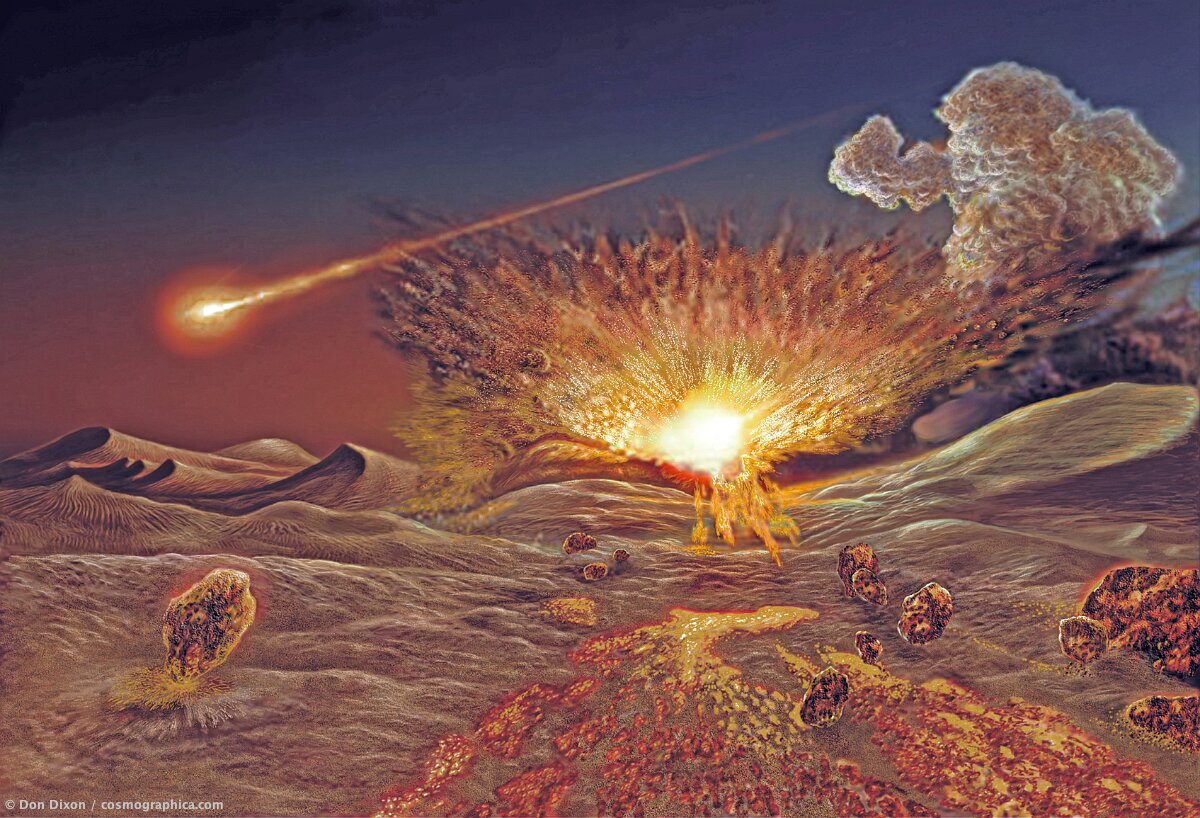
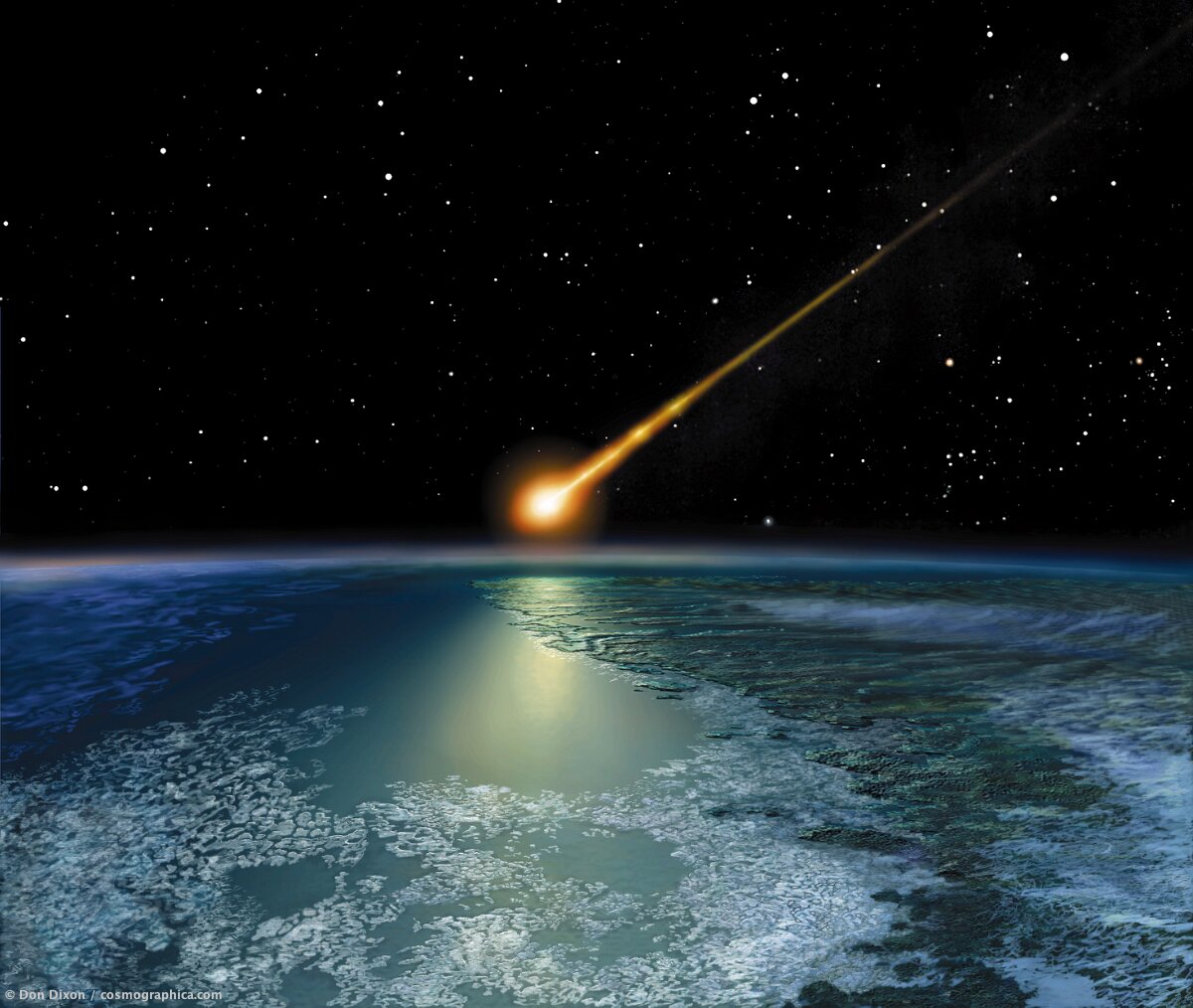
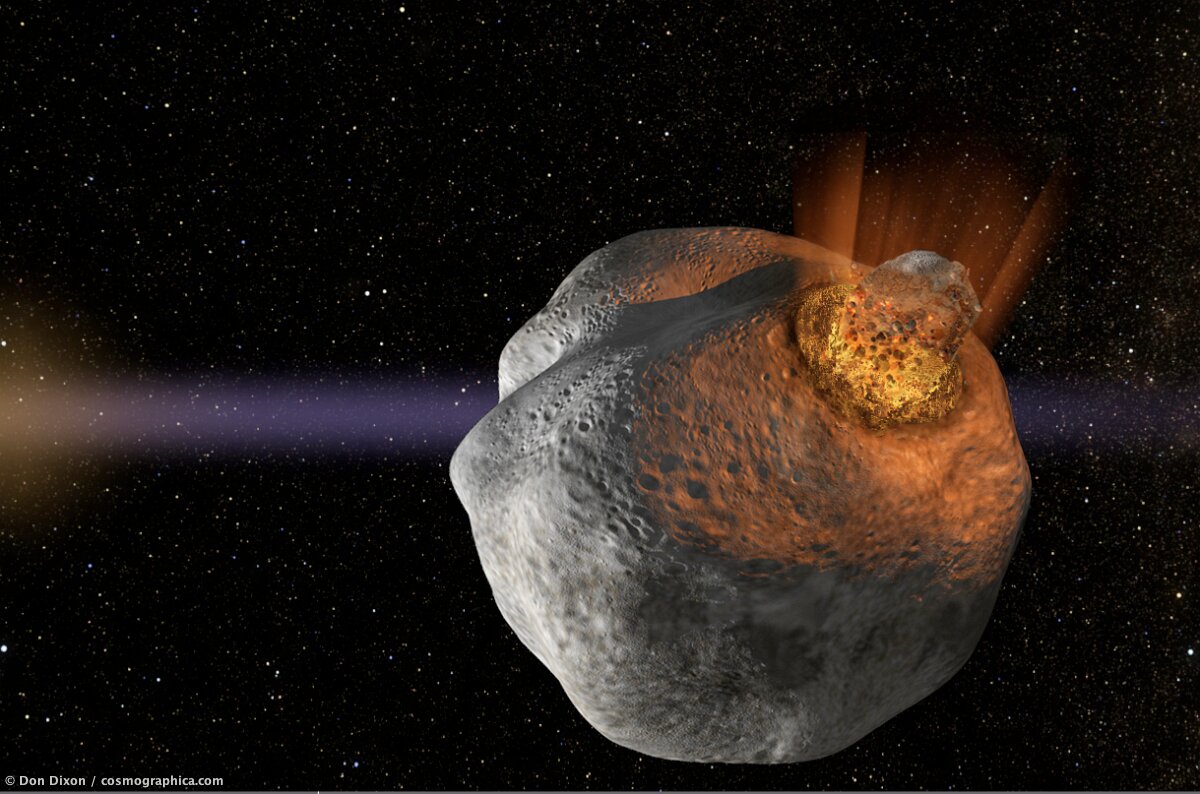
437-Asteroid-Collision
437-asteroid-collision-dixon – A large asteroid is struck by a smaller one. Since both bodies are porous, most of the energy is absorbed as heat, rather than dispersed with ejecta, thus explaining the internal melting of asteroids. Digital, for Scientific American. © 2005 by Don Dixon.
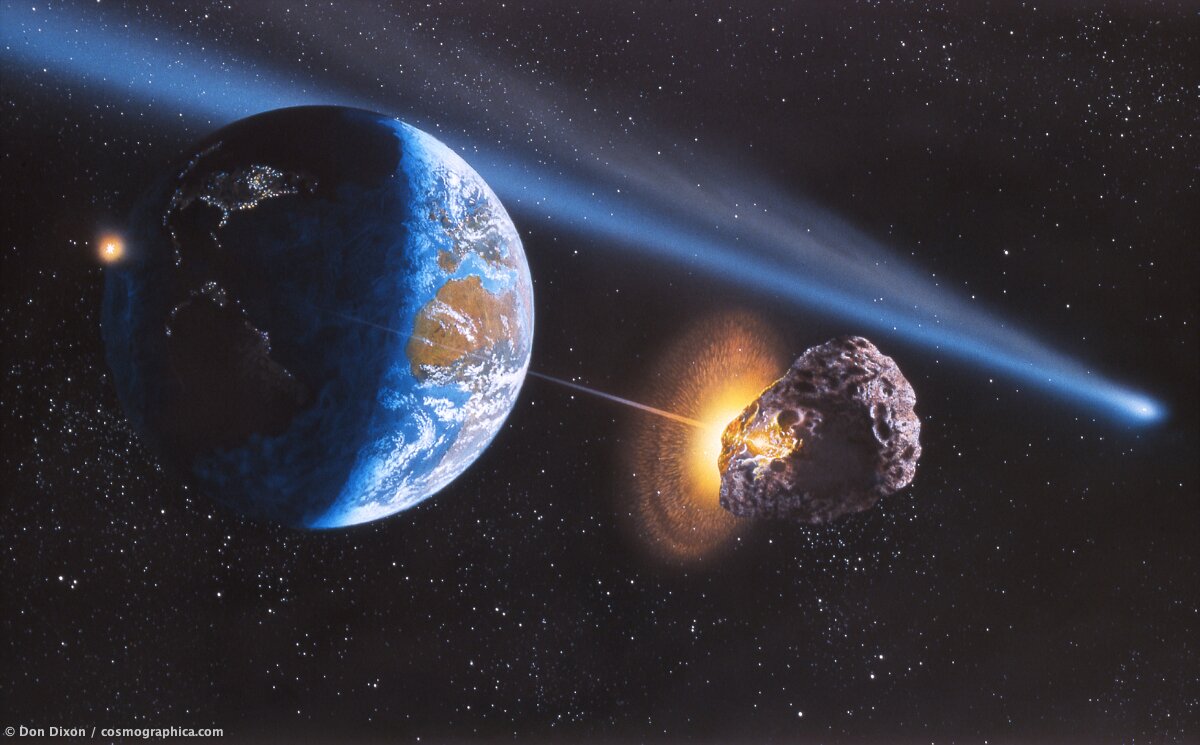
441-Deflecting-A-Comet
441-deflecting-a-comet-dixon –A high-powered laser in earth orbit blasts surface material from an approaching comet nucleus in an effort to deflect it. Pre-production art for NBC miniseries "Asteroid." Acrylic and goache, 1997. © 2005 by Don Dixon.
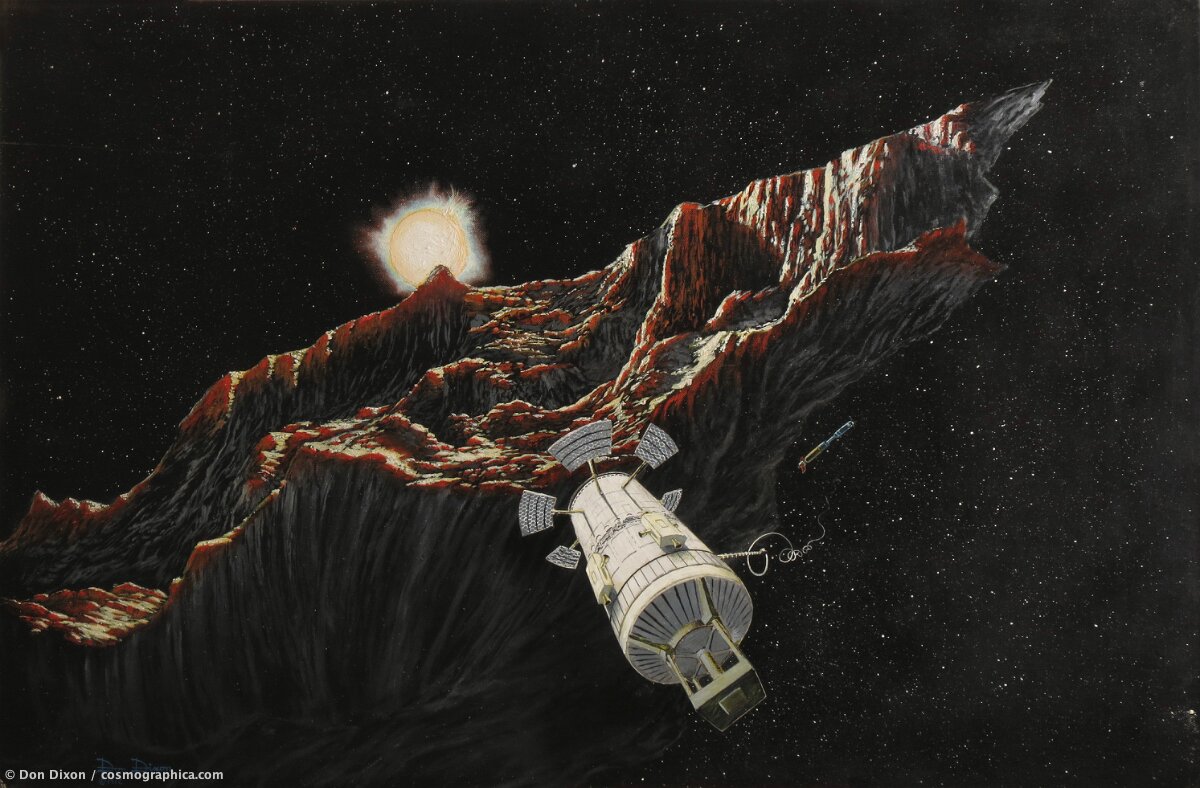
009-In-The-Shadow-Of-Icarus
009-in-the-shadow-of-icarus-dixon – an early painting by Don Dixon showing a crewed spacecraft sheltering in the shadow of the sun-diving asteroid Icarus as a tethered instrument examines the nearby Sun; 24 x 36 inches, oil on canvas with watercolor paper applique´, 1972; copyright Don Dixon